Where basement water comes from
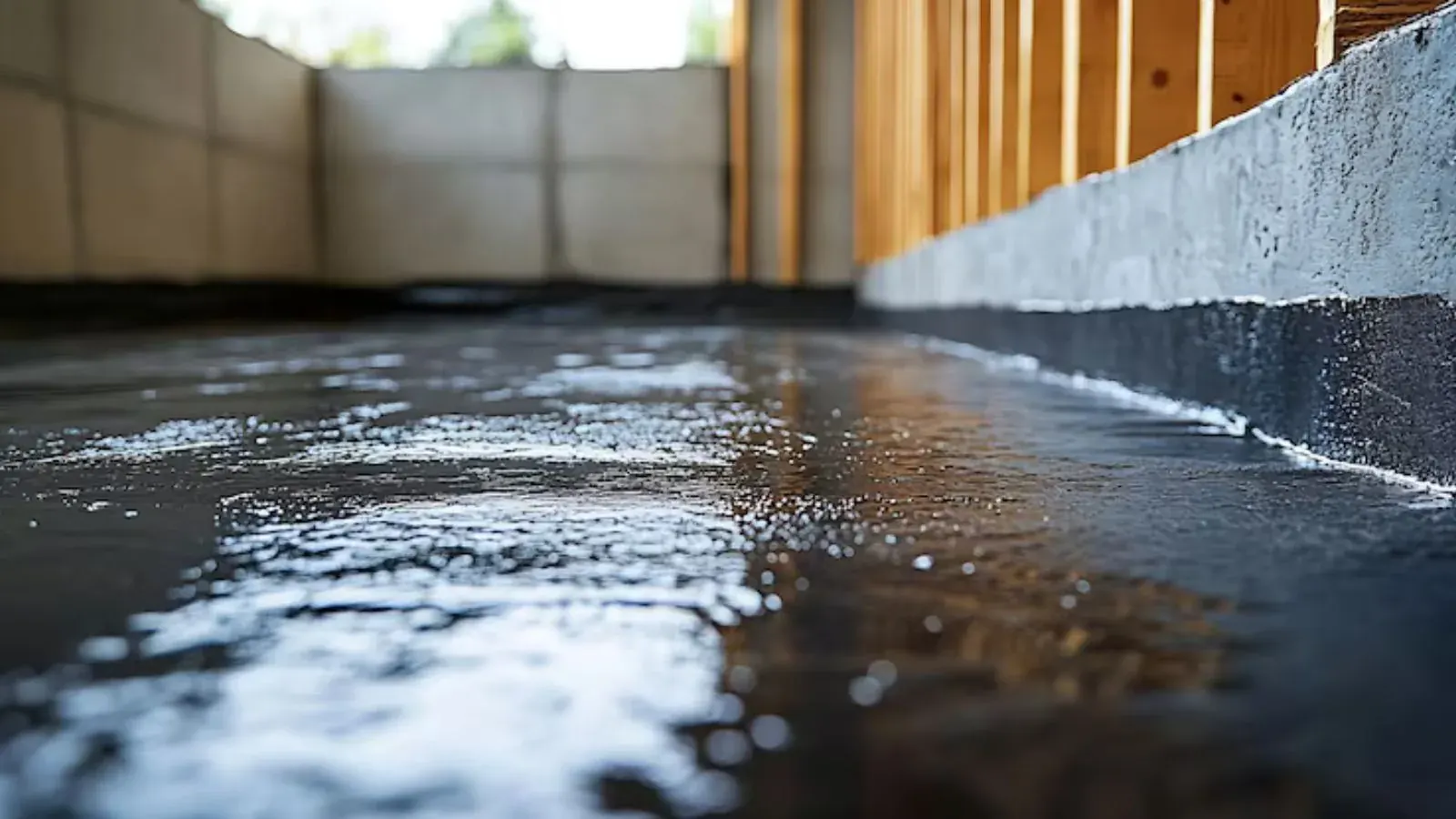
Water gets into a basement through a short list of paths. Rain soaks the soil beside the foundation and presses on the wall. Groundwater rises under the slab after a wet season. Gutters empty too close to the house. A pipe inside the wall or floor leaks and the water looks like seepage.
Before spending money on drains or coatings, rule out a plumbing leak. If the water meter keeps turning with every tap off, the water may be coming from a supply pipe, not from the ground. Our leak detection work can sort that out first.
Clues that point to groundwater or runoff:
- Water appears after rain and dries up within a day or two.
- Dampness is worst along the joint where the wall meets the floor.
- White crystals form on the concrete or block, called efflorescence.
- Water stains rise higher on the side of the house facing a slope.
- The floor stays damp near a corner where a downspout empties outside.
Waterproofing options compared
Each approach does a different job. The right mix depends on how much water you have and where it enters.
| Approach | What it does | Plumbing involvement | Trade-off |
|---|---|---|---|
| Gutters, downspouts and grading | Moves roof and surface water away from the foundation | None, or a drain pipe run | Cheapest first step, but does nothing for rising groundwater |
| Interior perimeter drain | Catches water at the footing and sends it to a sump pit | Drain pipe, pit and pump | Manages water that gets in, does not stop it entering |
| Sump pit and pump | Pumps collected water outside | Pump, check valve and discharge. See sump pump repair | Needs power or battery backup |
| Exterior excavation and membrane | Seals and drains the outside of the wall | Drain tile and connection to a discharge | Disruptive, costly and weather dependent |
| Wall crack injection or sealants | Fills a specific crack | None | Works on a single crack, not on seepage through block |
What we do and what we leave to others
We are plumbers, not masons or excavators. Our part is the pipe and pump side: installing or repairing a sump pit, setting a pump with a check valve, running the discharge line, and tying an interior drain into the pit. We can also check floor drains and find supply leaks.
For exterior excavation, wall repair or regrading we tell you honestly when another trade is the right call, and we coordinate with them on the drain connections. We would rather scope the plumbing part clearly than promise a result that depends on someone else's work.
Excavation needs an 811 call before any digging. Plumbing work on drainage piping needs a permit from a licensed plumber and an inspection, so ask the Milford plumbing inspector through Town Hall about your project.
Gutters, grading and other free fixes
Surface water causes more basement dampness than most owners expect. Downspouts that end at the foundation dump a roof's worth of rain beside the wall. Soil that slopes toward the house does the same.
Extend downspouts several feet from the house, keep gutters clear, and make sure the ground falls away from the foundation. These steps cost little and often cut the amount of water the drains and pump must handle. Do them before paying for anything larger.
Wet basements in Milford, MA
The Charles River drains the town and the Mill River flows through it, so groundwater can sit closer to the surface near those waterways and in low spots. If your basement is wet only in spring and after storms, that pattern points to groundwater, and a sump with a backup is often part of the plan.
Houses built decades ago often have block or stone foundation walls, which pass moisture more easily than poured concrete. A wall like that usually needs drainage, not just a coating, and the Milford plumbing inspector can tell you which permits apply to the drain work.
Plumbing work that changes drain or supply piping falls under the Massachusetts plumbing code (248 CMR), the state standard that the local plumbing inspector enforces.
What shapes the price of a waterproofing plan
We give a clear price before work starts for the plumbing part. These factors change it:
Waterproofing is a home improvement, not a repair covered by most policies. Water coming from a sudden burst pipe is different and may be covered, so ask your agent.
Describe where and when the water appears. Call (508) 389-4045 for a real number on the plumbing part.
Call to talk through where the water enters. We will tell you which parts are plumbing and which are not.
How a waterproofing consultation goes
A first visit is mostly looking and listening.
- Walk the basement. We look at floors, walls, drains and the sump area, and ask when the water shows up.
- Rule out leaks. We check the water meter and visible supply and waste lines.
- Outline options. You get the choices, what each can and cannot do, and which parts need another trade.
- Price the plumbing scope. You get a written scope and price for the pit, drain, pump or discharge before anything starts.
Basement waterproofing questions
No plumber honestly can, because outcomes depend on soil, water table and the condition of the walls. We scope the pipe, pit and pump work clearly and tell you what it will and will not do.
It controls water that gets in by sending it to a sump pit. It does not stop water entering the wall. For many basements that is enough, and for others exterior work is also needed.
Often. Downspouts that empty beside the foundation add a lot of water to the soil. Extending them several feet away is a low-cost first step.
Tape a small square of plastic wrap to the wall for a day. Moisture on the room side is condensation, while moisture under the plastic is seeping through the wall.
Drainage piping work requires a permit from a licensed plumber and an inspection. Ask the Milford plumbing inspector through Town Hall about your project, and call 811 before any digging.
Snowmelt and spring rain raise groundwater. Near the Charles and Mill rivers it can sit closer to the surface, so sump pits often fill more then.
Want to talk through your basement before deciding? Call (508) 389-4045 and describe where and when the water appears.
Related plumbing in the area
A water-stained basement floor may trace back to a sewer line repair problem or a clogged floor drain handled by drain cleaning. Homeowners in Mendon with private wells and septic systems should check those first.