Sewage is coming into the house
A sewer line that has broken or collapsed has nowhere to send the water your house produces. The wastewater rises to the lowest opening, which is usually a basement floor drain, a shower pan or a laundry standpipe. This is a health hazard and a property emergency in one.
We answer after-hours calls the same way we answer daytime ones. A plumber can come out the same night, open the line if it can be opened and show you on camera what caused the backup. The permanent repair is then planned once the camera shows what failed.
Until the plumber arrives:
- Shut off the dishwasher and washing machine. Skip showers and flushing.
- Keep children, pets and anyone with a weak immune system out of the affected room.
- Do not use a drain-opening chemical. It will not fix a broken pipe and it makes the line unsafe to work on.
- Stay out of standing water if outlets or appliances are submerged, and call 911 about the electrical hazard.
- Do not start digging in the yard. Call 811 before any excavation, and let the plumber locate the pipe first.
Signs the problem is the pipe, not a clog
A clog is a blockage inside a healthy pipe. A failed sewer line is a damaged pipe, and the signs differ. Slow drains that return days after cleaning, wet or sunken ground over the line, and sewer gas in the basement all point toward damage.
Rodents entering the house, or a patch of unusually green grass over the line in a dry week, can also be clues. None of these proves a break, which is why the next step is a camera and not a shovel.
Common reasons a sewer line fails:
- Tree roots entering a joint, growing into a mat and splitting the pipe.
- Offset or separated joints where the soil has shifted.
- Cracked or crushed clay and cast iron from age, load or frost movement.
- A belly, which is a low spot that holds water and solids.
- Corrosion that flakes the inside of old cast iron until the wall gives way.
How we locate the failure
Digging without a diagnosis costs money and lawn. This is the order we follow.
- Clear enough to see. If the line is full, the plumber opens it with a cable so the camera has something to look at. The temporary clearing is explained as temporary.
- Camera run. The camera travels toward the street and shows root entry, cracks, offsets, bellies or a collapse. Depth to the problem is measured with a locator.
- Mark the spot. The plumber marks the failure above ground, so you see where it sits relative to the house, driveway and trees.
- Options and price. You get the realistic repair choices in writing and in plain words, with the trade-offs, before anything is scheduled.
Spot repair, lining or replacement
The right repair depends on how much pipe is damaged and where. Here is how the three main approaches compare.
| Approach | How it works | Suits | Trade-offs |
|---|---|---|---|
| Spot repair (dig and patch) | Excavate over the failure, cut out the bad section, fit new pipe with couplings | One short damaged section in an otherwise sound line | Digs a trench, but costs less than replacing the whole run |
| Trenchless lining | A resin-coated liner is pulled in and cured to form a new pipe inside the old one | Long runs with cracks, root-prone joints or scale, and a line that is not collapsed | Small access holes, but the pipe must be cleared first and the bore shrinks slightly |
| Full replacement | New pipe along the old route or a new one, often by open trench or pipe bursting | Collapsed, crushed, badly offset or bellied lines | Most disruption and cost, longest-lasting result |
Lining cannot repair a pipe that has fully collapsed or lost a section. Replacement is the honest answer in that case, and we say so. For a line that is only clogged and not damaged, sewer line cleaning is the lower-cost route.
Roots, offsets and collapses in detail
Roots go where water and nutrients are. A sewer joint leaks a little, the roots find the moisture and slip in. Over time they thicken until they block flow and pry the joint apart. Cutting roots clears the line for a while, but the opening stays.
An offset happens when two pipe sections shift out of line. Solids catch on the lip, and paper builds up behind it. Sometimes a short spot repair fixes an offset. A bad offset at the foundation wall may need more work.
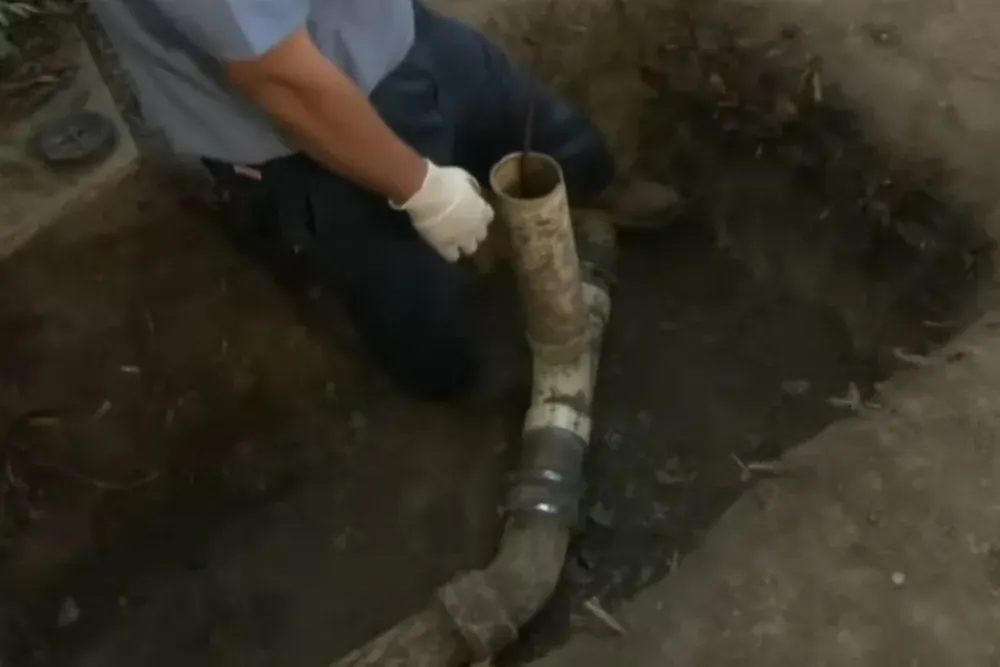
A collapse is the worst case. The pipe is crushed or has dropped out of shape, and a cable or a camera cannot pass it. Excavation is normally needed. Until the line is open again the house cannot drain normally, which is why a collapse gets emergency treatment.
Call the 24/7 line. We will get the backup stopped and a camera on the line.
Milford sewer line repair: who owns what
Milford is served by town sewer that drains to the Town of Milford's wastewater plant. A house connection that has sat in the ground for decades is more likely to have cracked joints or roots than a new one. The Sewer Department can tell you where the town's pipe ends and yours begins, and its number is in the FAQ below.
Plumbing work on sewer or drainage piping in Massachusetts needs a permit, and the permit goes only to a licensed plumber. The work gets inspected. Ask to see the permit before work begins, and ask the Milford plumbing inspector through Town Hall if you want to confirm it was filed.
If the failure is under the street or at the town connection, the repair may involve the town and a road opening. We sort out which side the problem is on before you commit to a plan.
Sewer piping work needs a permit from the local plumbing inspector under the Massachusetts plumbing code (248 CMR), the governing standard,, and 811 should be called before any digging starts.
What decides the cost of a sewer repair
Sewer repairs range widely, so the price is built from the job in front of us. A clear price comes before work starts. These are the main factors:
Many homeowner policies exclude damage from wear, roots and gradual deterioration of a pipe. Sudden backup damage may be covered only with an endorsement. Read your policy and ask your agent before the repair, and keep photos and the camera footage.
Get a real figure by calling (508) 389-4045 after a camera pass.
Decisions homeowners ask us to explain
Many people ask whether to repair or replace. The honest answer depends on the camera. A single cracked section in a long, otherwise good line is a patch. A line with repeated cracks and root-filled joints along its length usually justifies lining or replacing the whole run, because patching one section will not stop the next failure.
Another common question is who you can trust. Only a licensed master or journeyman plumber may do this work in Massachusetts, and you can confirm any plumber's licence with the Board of State Examiners of Plumbers and Gas Fitters at 617-727-9952. Get the scope and price in writing, ask to see the permit and confirm liability insurance.
Sewer line repair questions in Milford
Yes. The line is open 24 hours. A sewage backup is dispatched as an emergency, and a plumber can stop the backup and camera the line that night. The permanent fix is scheduled once the damage and the plan are clear.
A clog clears with cleaning and stays clear. A break keeps returning, often with wet ground, sunken soil or a sewer smell. A camera pass tells you for certain, and it is usually worth doing after a second backup.
No. Lining works well in long runs that are cracked or root-prone but still open. It does not suit a collapsed pipe or a severe belly. Digging gives access to fix those, and sometimes a short dig is the cheaper answer.
Yes. Work on sewer or drainage piping is not a minor repair, so the local plumbing inspector must issue a permit before work and the job is inspected. Permits go only to licensed plumbers. Ask the Milford plumbing inspector through Town Hall.
That depends on where the town's pipe ends and yours begins. Call the Milford Sewer Department at (508) 473-2054. We can show you on camera where the damage sits so the conversation with the town is specific.
Often not for wear, roots or age. Some policies cover a sudden backup with an endorsement. Read your policy and ask your agent before work begins. Keep the camera video and photos in case you file.
If you are not sure whether the line is broken or only blocked, call (508) 389-4045. Dispatch will ask what the drains are doing and send the right equipment.
Before you commit to a repair
If you have not yet had the line scoped, a sewer camera inspection shows the damage before anyone digs. A line that scales and snags can often be restored with hydro jetting when the pipe is sound. A saturated basement may also need the sump pump checked, and we serve Bellingham on the same line.