
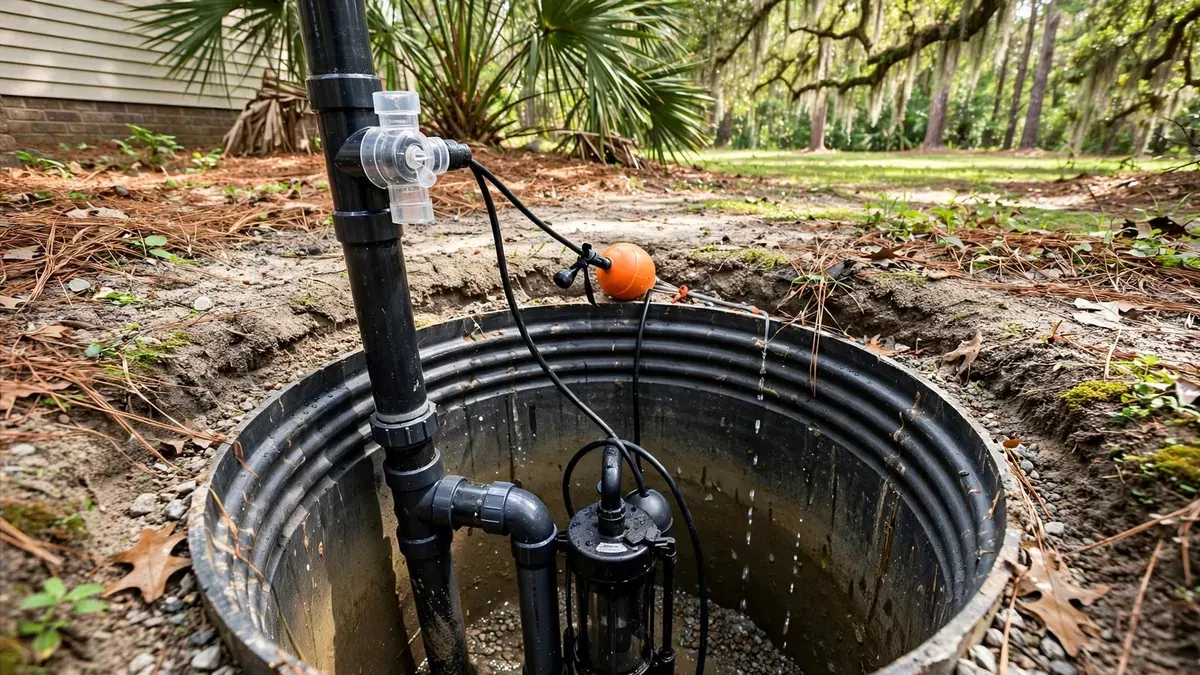
The pump quit and water is rising
A sump pump fails most often when it is needed most. Heavy rain fills the pit faster than a worn pump can empty it, or a power outage stops it entirely. Once the water reaches the floor slab it spreads across the basement within an hour or two.
If the power is out, a battery backup is the only thing that keeps the pit from filling. If the power is on, the cause is usually one of four things: a stuck float, a seized motor, a clogged intake or a failed check valve. A plumber can usually tell which in a few minutes at the pit.
Do this while waiting for the plumber:
- Do not step into water if the basement has outlets, a panel or a freezer on the floor. Call 911 first if water is near the electrical panel.
- Unplug the pump only if the cord and outlet are dry and you can reach them without wading.
- Bail the pit with a bucket to buy time if it is safe to reach.
- Move boxes, rugs and stored items onto shelves or tables.
- Note where the water enters, from the pit, through a wall crack or along the floor joint.
Why sump pumps fail
Most pumps do not fail suddenly. They run for years unnoticed, then wear out at the switch, the impeller or the motor. A pump that has run constantly through a wet spring is working hard and may not survive the next storm.
The float switch is the usual first failure. It rides up and down on the water, and if it jams against the pit wall or its tether tangles, the pump either never starts or never stops. A pump that runs dry overheats and burns out quickly.
Warning signs before a failure:
- The pump cycles on and off every few seconds with little water in the pit.
- It runs but the water level does not drop.
- Loud grinding, rattling or a hot smell from the motor.
- Water standing in the pit with no sound at all.
- Rust on the casing or a pump that is more than a decade old.
Pump problem, likely cause, usual fix
The symptom narrows the cause fast. This is how we think it through at the pit:
| What you see | Likely cause | Typical remedy |
|---|---|---|
| Pump silent, pit full | Stuck float, dead motor or tripped breaker | Reset breaker, free or replace the float, or replace the pump |
| Pump runs, water does not drop | Clogged intake, airlocked impeller or failed check valve | Clear the intake, drill a small relief hole or replace the check valve |
| Cycles every few seconds | Check valve leaking back or float set too low | Replace the check valve or adjust the float |
| Water in the pit after a power cut | No battery backup | Install a second pump on battery power. See basement waterproofing for the bigger picture |
| Loud banging after each cycle | Check valve slamming shut | Replace it with a quieter spring-loaded type |
Check valves, discharge lines and where the water goes
The check valve sits just above the pump and stops water in the discharge pipe from falling back into the pit. When it fails, the pump re-pumps the same water over and over and wears out early. A thump or a gurgle after the pump stops is the usual hint.
The discharge line carries water outside and away from the foundation. If it ends too close to the house, the water soaks into the soil and runs straight back to the pit. If it freezes in winter, the pump runs against a blocked pipe and overheats. Ask us to check where yours ends.
Sump discharge is normally kept out of the sanitary sewer. Confirm the rules for your own setup with the Milford plumbing inspector through Town Hall or the Milford Sewer Department at (508) 473-2054.
Call the 24/7 line during the storm. Tell dispatch whether the pump is silent, running, or buzzing.
Wet basements and Milford's waterways
The Charles River drains Milford and the Mill River flows through town. A house close to either waterway, or in a low spot on a slope, is more likely to see groundwater rise in spring and after long rain. The pit is where that water collects, and a pump that has been fine in a dry year may be overwhelmed in a wet one.
Because Milford sits in the Charles River watershed, a pit that fills even in dry weather can be a sign of a high water table or a leaking pipe. A plumber can tell the difference by checking whether the water is clear, whether it keeps coming when the weather is dry, and whether the water meter spins. Our leak detection service can help if the answer is a pipe.
Where a sump discharges is a question for the Milford plumbing inspector and Sewer Department, because the Massachusetts plumbing code and local rules set the standard.
Battery backup and replacement
A backup pump runs on a deep-cycle battery and takes over when the main pump or the power fails. It sits slightly higher in the pit so it only starts if the water gets past the main pump. The battery needs testing once or twice a year, and it will not last forever in a long outage.
Replacement is usually better than repair when the pump is old, the housing is cracked or it has failed repeatedly. A new pump, a fresh check valve and a clean pit often cost less than a flooded basement. We explain the choice and give a clear price before work starts.
What affects the cost of sump pump repair
The real number comes from a call, but these are the factors:
Homeowner policies often exclude groundwater and sump failures unless you add a water backup endorsement. Read yours and ask your agent before a storm hits.
Call (508) 389-4045 and describe what the pump is doing for a real price.
Sump pump questions from Milford homeowners
Yes. The line is answered all night and through weekends and holidays, which is when most pumps fail. A plumber can often restore pumping the same visit, or set up a temporary pump while a permanent fix is arranged.
Usually the intake is clogged, the check valve is stuck, or an air pocket is trapped in the impeller. A plumber can clear the intake and test the valve in a short visit.
Many last around ten years, though heavy use shortens that. Age alone is not a reason to replace one, but a pump that is old and cycling constantly is a reasonable candidate.
If your basement floods when the power goes out in a storm, yes. A backup is a second pump on battery power that starts when the main pump cannot.
Away from the foundation, on ground that slopes away from the house, and clear of the neighbor's property. It is normally kept out of the sanitary sewer. Check local rules with the Milford plumbing inspector.
It can mean a high water table, especially near the Charles or Mill River, or it can mean a leaking supply line. Check whether your water meter moves with everything off, then call us.
Replacing a working part of a fixture is generally minor, but changes to drainage piping need a permit from a licensed plumber. Ask the Milford plumbing inspector through Town Hall about your specific job.
Not sure whether your pump is dying or just working hard? Call (508) 389-4045 and describe the sound, the water level and how often it runs.
Other water problems that look like a sump failure
If water comes from a floor drain instead of the pit, the drain cleaning page covers backups. Water from a wall pipe is a burst pipe repair job. Homes in Holliston near the Charles River call the same 24/7 line.