
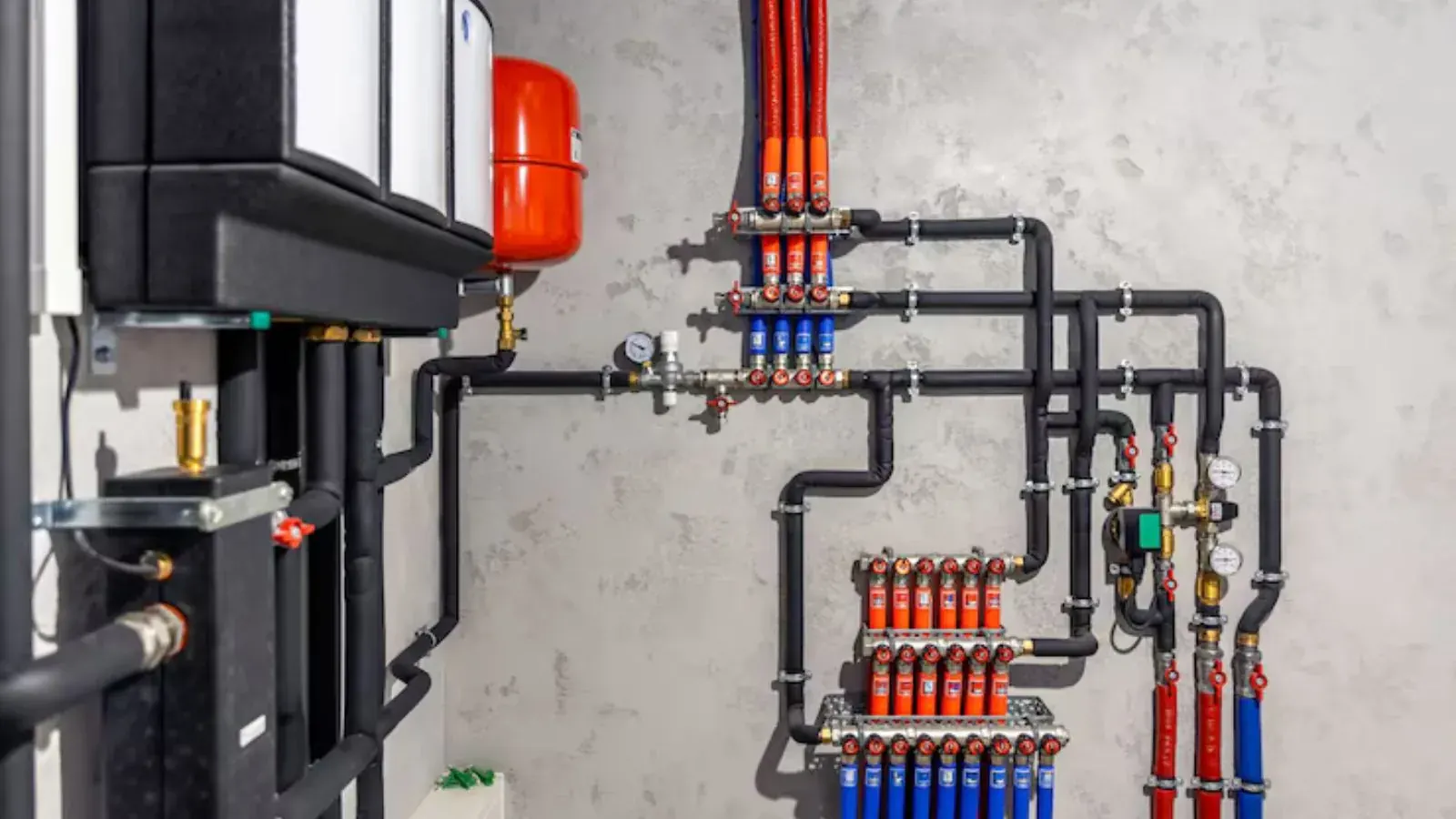
What the expansion tank does in a hot water boiler
A hydronic boiler is a closed loop full of water. Water expands as it heats, and a sealed loop with no extra room sees pressure shoot up fast. The expansion tank is a steel vessel with an air cushion, usually separated from the system water by a rubber diaphragm.
As the loop heats, extra water pushes into the tank and compresses the air. As it cools, the air pushes the water back out. Done right, the gauge on the boiler rises a few pounds when hot and settles back when cold.
Signs your expansion tank has failed
A bad tank rarely announces itself. People blame the boiler for odd behavior that really comes from the tank. Compare the list below with what your system does after an hour of heat on a cold evening.
Common symptoms:
- The pressure gauge climbs well past its normal hot reading and stays high.
- The pressure relief valve drips or spits when the boiler cycles.
- The boiler needs water added every few weeks because the relief valve keeps letting it out.
- Banging or kettle-like noises from the boiler as it heats.
- The tank feels full of water and cold all over when you tap it, instead of hollow at the top.
Tank problem or something else?
Several boiler faults look alike from the basement. This table helps you sort the likely cause before you call.
| What you see | Likely cause | What a plumber does |
|---|---|---|
| Gauge climbs high when hot, falls when cold | Lost air charge or ruptured bladder in the tank | Tests the air valve, recharges or replaces the tank |
| Relief valve drips constantly, even when cold | Worn valve seat, or an overfeeding auto-fill | Checks valve and fill valve, replaces the failed part |
| Pressure low, radiators gurgle | Air in the loop or a leak somewhere | Purges air and looks for the leak. See leak detection |
| Water at the base of the tank | Corroded tank shell | Replaces the tank and checks nearby piping |
| Boiler shuts down on high limit | Flow or burner problem, not the tank | Diagnoses the boiler itself. See boiler repair |
Safe checks a homeowner can make
Read the pressure gauge cold, then again after the boiler has run a full cycle. Write both numbers down. A swing of a few pounds is normal. A big jump is the cue to call.
Look at the tank itself. Rust streaks, a damp floor below it or a bulging shell mean it is done. Rap it lightly with a knuckle. A diaphragm tank sounds hollow near the top and dull near the bottom. Dull all over means it has probably filled with water.
Stop there. Pressing the small air valve on the tank can release water if the diaphragm has failed, and a hot system can scald. Testing the air side properly means isolating the tank, draining it and using a gauge, and that belongs to the plumber.
Call before the relief valve starts leaking on your floor. A tank check is usually a short visit.
How the repair goes
Most expansion tank repairs follow the same order. The sequence below is what to expect from a licensed plumber.
- Read the system cold. The plumber notes the cold fill pressure and the tank type, then runs the boiler to see how far pressure climbs.
- Isolate and test the tank. With the system valved off and the tank drained, the air side is tested with a gauge. A tank that holds no air, or that leaks water from the air valve, is replaced.
- Replace or recharge. A tank with a sound diaphragm gets its air charge set to match the system's fill pressure. A failed tank is swapped for a new one sized to the water volume of the loop.
- Refill, purge and verify. The loop is refilled, air is bled from the radiators or baseboards, and the plumber watches pressure through a full heating cycle to confirm it stays in range.
Sizing matters. A tank too small for a large loop leaves pressure high. A plumber sizes it from the radiators or feet of baseboard and the piping volume, not from the old tank's label alone.
Milford, MA: your water supply and your boiler
Milford Water Company supplies the town, and your boiler's auto-fill valve draws from that supply every time the loop loses water. The utility treats that water for corrosion control.
That has a practical meaning. A failed expansion tank that keeps the relief valve dripping makes the auto-fill keep adding fresh water, and fresh water brings dissolved oxygen into the loop. Oxygen is what rusts boiler parts and pipes from the inside. Fixing the tank early limits that.
To learn what feeds your system, request the utility's yearly Consumer Confidence Report and test your own tap.
According to the state's consumer fact sheet, work on the water supply to a boiler is plumbing work that needs a licensed plumber and a permit.
What affects the cost of expansion tank repair
The price is set before the work begins, and these factors decide whether the job runs short or long:
Boiler service is normally a maintenance expense. Insurance may respond to sudden water damage from a burst pipe, but not to wear on a tank, so do not wait for a leak to fix a tank that is already showing signs.
To price your own system, ring (508) 389-4045 with the gauge readings in hand.
When to call and what to leave alone
Reading a gauge and looking at a tank are fine for any homeowner. Draining a system, working on the relief valve and replacing piping belong to a licensed plumber. Whether a tank swap counts as a minor repair is a question for the Milford plumbing inspector at Town Hall.
Gas and oil are separate trades. We handle the water side, including the tank, valves and piping. Burner faults on an oil-fired boiler go to a licensed oil burner technician. A gas smell means leave and call your gas utility or 911 first.
For a full diagnosis of a boiler that is cycling badly or short of heat, the boiler repair page explains what a visit covers. If the whole system is at the end of its life, the plumbing installation page describes replacing piping and components. Boilers in Hopedale and Bellingham fail the same way, and the same line serves both towns.
Boiler expansion tank questions from Milford homeowners
There is no fixed number. A diaphragm tank lasts until the rubber ages, the shell rusts or the air charge leaks away. Checking pressure behavior each fall tells you more than the age of the tank.
No. A worn valve seat or an auto-fill that overfeeds can drip too. A plumber checks the cold pressure and the tank's air side to tell which part is at fault, since replacing the valve alone will not help if the tank is bad.
We advise against it. The tank has to be isolated from the system and the charge set with the system pressure drained. If the diaphragm has failed, pressing the valve releases hot water. A licensed plumber does this safely.
It supplies the make-up water your auto-fill valve adds. The utility's water quality report lists what that water contains, and a tap test covers hardness.
Call the 24/7 line. If water is running onto the floor, shut off the boiler at its switch and the water feed to the boiler if you can reach it safely. A plumber can stop the discharge and make the system safe.
Not sure whether your gauge reading is normal? Call (508) 389-4045 and read dispatch the cold and hot numbers. That is often enough to tell whether the tank is the problem.