
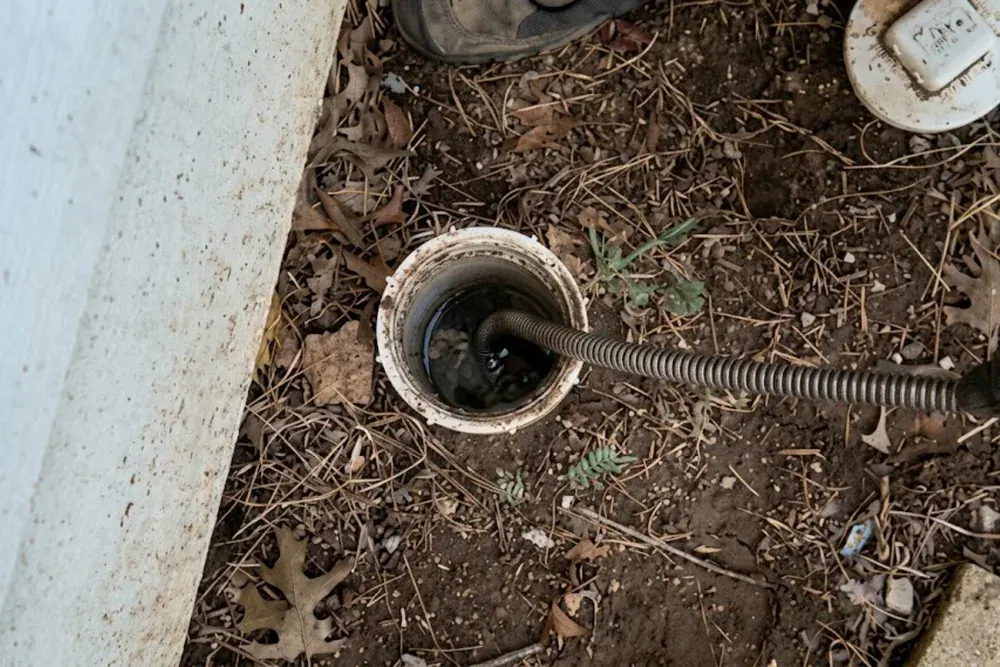
Start with where the water backs up
Before you blame a cause, locate the clog. A drain pipe is a branching tree. Each fixture has its own small branch, branches join a larger line, and that line leaves the house to the sewer or septic tank.
A clog in a small branch slows one fixture. A clog in the larger line slows everything downstream of it. When the big line is restricted, water tends to surface at the lowest opening, such as a basement floor drain.
Grease and food in kitchen drains
Kitchen clogs are mostly cooking fat. Warm grease runs down the drain as a liquid, then cools on the pipe wall and hardens into a waxy coating. Rice, pasta, coffee grounds and eggshells stick to that coating and narrow the pipe a little more each week.
Hot water does not fix this once it has set. The grease melts, travels farther down the line and sets again where the pipe is cooler. The better habit is to wipe pans with a paper towel and put fat in the trash.
A disposal does not remove the problem. It chops food small enough to slide into the pipe, where it still catches on grease. If yours hums or will not clear, see our notes on garbage disposal repair.
Hair, soap and mineral scale in bathroom drains
In tubs and bathroom sinks, hair is the skeleton and soap is the glue. Bar soap leaves a film that grabs hair and builds a plug in the trap, usually within the first foot or two below the drain. A drain strainer is the cheapest fix.
Toothpaste, shaving residue and mineral scale narrow the pipe over time. A tub that drains slowly for months and then stops is following this pattern. A hand snake or a plastic drain tool can remove the plug when it sits close to the opening.
Causes at a glance
Use this table to match your symptom to the likely cause and the next step.
| What you notice | Likely cause | Next step |
|---|---|---|
| One kitchen sink drains slowly | Grease and food residue in the trap or branch | Clear the trap, then change what goes down |
| Tub or shower pools at your ankles | Hair and soap plug close to the drain | Use a strainer and a hand tool |
| Toilet is sluggish or overflows | Too much paper, wipes or a toy in the trap | Plunge once, then call if it repeats. See toilet repair |
| Several fixtures slow together | Partial blockage in the shared branch or main | Call a plumber for cable or jetting |
| Floor drain gurgles after laundry | Main line restricted by roots, grease or a sag | Call for a camera check |
| Same clog returns in weeks | Roots, a broken joint or a belly in the pipe | Book an inspection before another snaking |
Wipes, paper and what the toilet cannot take
Toilets handle human waste and toilet paper. Flushable wipes, cotton swabs, dental floss and feminine products do not break down the way paper does. They snag on rough spots in the pipe and collect more paper behind them.
A toilet has a built-in trap shaped like an S, and that trap is the narrowest spot. Anything bulky lodges there first. A flange plunger usually clears it. If a second plunge fails, stop. Forcing it can crack the porcelain or push the blockage into the main line.
Roots, sagging pipe and main-line causes
When the same drain keeps clogging, the cause is often in the pipe, not in what went down it. Roots enter through hairline gaps at joints, grow into a mat and net toilet paper. A pipe that has settled can develop a belly, a low spot that holds water and solids.
Older cast iron and clay lines add rough scale and offset joints that catch debris. A drain cleaning visit can open the line, but unless the joint is repaired, the clog comes back. A camera shows which problem you have, and sewer line cleaning covers clearing the main itself.
If sewage is coming up, do this while you wait for a plumber:
- Stop all water use, including the washing machine and dishwasher.
- Keep children and pets out of the wet area.
- Do not pour chemical opener into a backed-up line.
- Call the 24/7 line and report which drains are affected.
Milford, MA: sewer or septic changes who fixes it
Most Milford homes drain to a town sewer. The Town of Milford runs the wastewater plant and discharges to the Charles River, and the Milford Sewer Department can be reached at (508) 473-2054. If only your house backs up, the clog is almost certainly on your side of the line. If neighbors have problems at the same time, report it to the department.
Nearby towns differ. Mendon has no town sewer, so every home has its own septic system, and a slow drain there can mean a full tank or a failing leach field instead of a simple clog. In Holliston, ask the DPW whether your street is on town sewer before you assume.
The state's consumer guidelines treats clearing a blocked drain as a minor repair, which is why it needs no permit while replacing the pipe does.
What decides the cost of fixing a clog
Pricing depends on the situation, and the figure is agreed before the work begins. These are the main variables.
Drain cleaning is normally a maintenance cost. Sewer backup coverage on a homeowner policy is often an add-on, so read yours before assuming it applies.
Not sure which cause you have? Call (508) 389-4045 and describe which fixtures are slow.
Habits that prevent the next clog
Most clogs are a habit problem with a cheap fix. These steps cover the common causes.
A simple prevention routine:
- Wipe greasy pans and put the fat in the trash.
- Put a mesh strainer in every tub and shower drain.
- Flush only toilet paper and human waste.
- Have a camera check done if one drain clogs twice in a year.
Clogged drain questions from Milford homeowners
In kitchens it is grease combined with food scraps. In bathrooms it is hair and soap. In toilets it is too much paper or flushed wipes. In a main line, the usual causes are roots and pipe damage.
A repeat clog usually means the cause was never removed. A cable can punch a hole through grease or roots and leave the pipe wall coated. A camera inspection tells you whether you have roots, a belly or a broken joint.
We advise against it for anything beyond a slow sink. It does not dissolve roots, it can damage old pipes and traps, and it leaves caustic liquid in the line that is dangerous to the next person who opens it.
Yes. Roots follow moisture and enter through hairline cracks and loose joints. Once inside, they grow into a mat and catch paper. Clearing them gives temporary relief, and sealing or lining the joint stops the repeat.
Not for clearing a clog. State consumer guidance treats that as a minor repair. Replacing or altering the pipe itself is different, and the Milford plumbing inspector at Town Hall can answer for a specific job.
One house backing up points to your own pipe. Several homes on a street backing up at once points to the town main, which is a call to the Milford Sewer Department.
Seeing more than one slow drain, or the same clog twice? Call (508) 389-4045. Dispatch will ask which fixtures are affected and tell you whether it sounds like a local clog or the main line.