
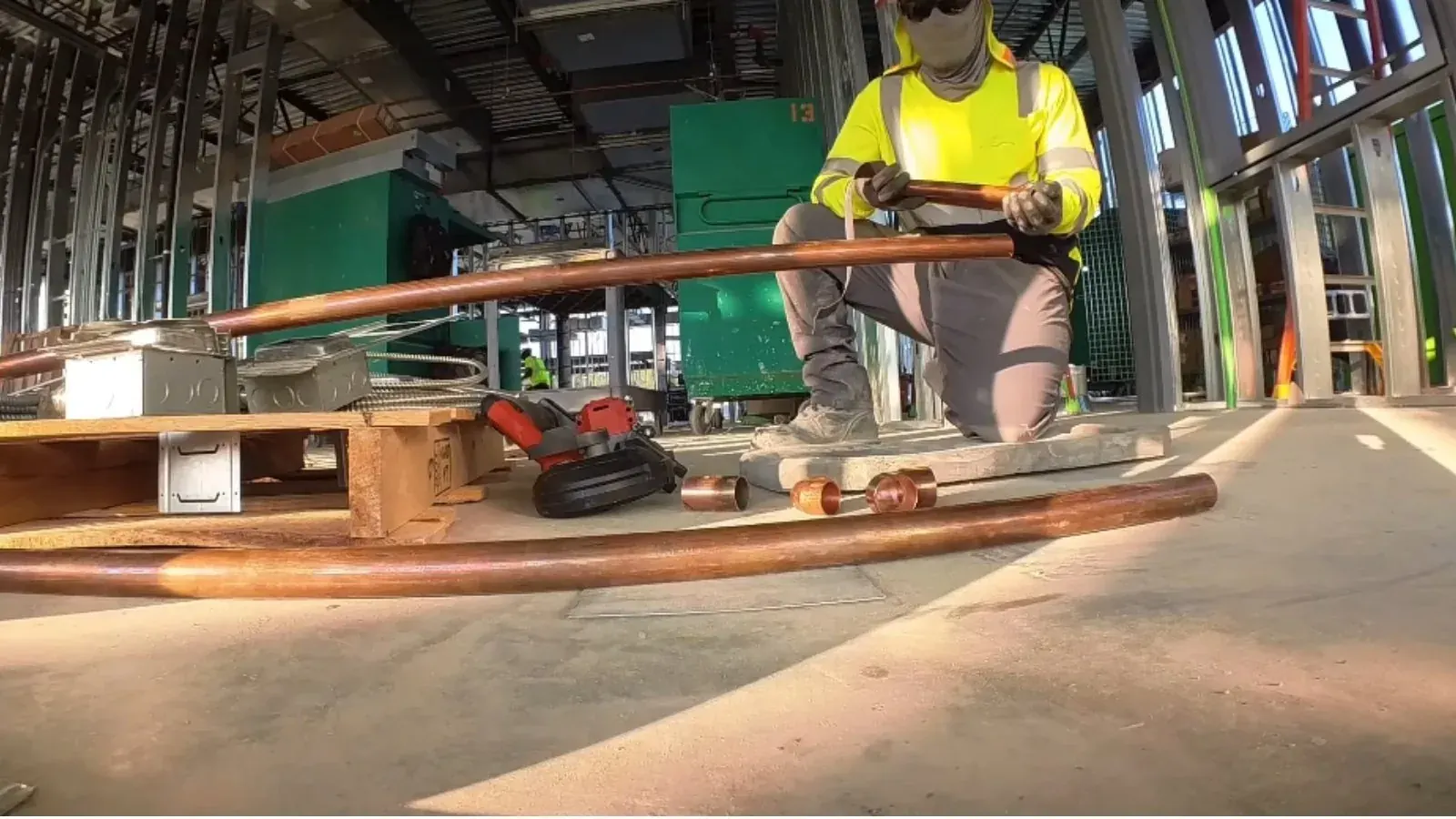
What goes into a hydronic system
The boiler heats water and a circulator pump pushes it around the loop. Each baseboard releases heat into the room by warming the air around its fins, which rises and pulls cooler air in at the bottom.
Because water holds heat well, the system runs quietly and keeps rooms evenly warm. It also means the work is mostly plumbing: copper or PEX piping, valves, an expansion tank, an air separator and a fill line that connects to the house water.
The parts you should see on a quote:
- Boiler sized to the heat loss of the house, not to the old unit's label.
- Circulator pumps or zone valves for each zone.
- Expansion tank, air separator and relief valve.
- Baseboard units or radiators sized for each room.
- Thermostats for each zone and the wiring to them.
- Fill valve with a backflow preventer on the make-up water line.
Baseboard, radiators or in-floor tubing
The emitter you choose changes the install, the cost and how the rooms feel. This table compares the three common options.
| Emitter | How it heats | Install notes |
|---|---|---|
| Fin-tube baseboard | Warms air that rises off the fins along the wall | Runs along exterior walls and is the easiest retrofit in most rooms |
| Cast iron or panel radiators | Heat radiates from a large surface | Take more wall space and are heavy, but hold heat well |
| In-floor tubing | Warms the floor itself | Best during construction or when the floor is open, and needs water at a lower temperature |
Most retrofit homes use baseboard. It needs only a few inches along the wall, and a plumber can run the supply and return piping through the basement ceiling. For in-floor work, the floor has to be opened, which makes it a larger project.
Choosing a fuel and sizing the boiler
Hydronic boilers burn natural gas or oil, or run on electricity. The choice usually follows what the house already has. A gas boiler needs a gas line to the mechanical room, and your gas utility handles the service side. We do not name the utility, and an oil burner needs a licensed oil burner technician for its part of the work.
Sizing matters more than people expect. An oversized boiler cycles on and off too often, wastes fuel and wears out sooner. A plumber calculates the heat loss from the house itself, counting the wall area, windows and insulation. Do not accept a size based only on what was there before.
Call and tell dispatch about the house, the fuel and the rooms you want heated. The plumber will explain the options plainly.
How the installation unfolds
A full hydronic install moves through the house in a predictable order.
- Heat loss and room layout. The plumber measures the rooms, walls and windows to size the boiler and the baseboard length for each one.
- Permit and planning. A licensed plumber requests the permit before work begins. The local plumbing inspector issues it, and the work gets inspected.
- Piping and emitters. Supply and return mains are run through the basement, branches rise to each room, and baseboard or radiators are mounted.
- Boiler and controls. The boiler is set, the expansion tank, air separator and valves installed, and thermostats wired by zone.
- Fill, purge and test. The system is filled, air is purged from each zone, pressure tested and run through a full heating cycle.
Zones: why one thermostat is not always enough
A zone is a part of the house with its own thermostat and its own circulator or valve. A two-story house often does well with one zone per floor, because heat rises and the upstairs warms faster than the basement.
More zones cost more to install but let you keep a seldom-used wing cool. Fewer zones are simpler and cheaper. A plumber can show you the trade-off for your floor plan before you commit.
Milford, MA: older houses, permits and your water supply
Milford was incorporated in 1780, so the town holds houses from many building eras. A newer addition and an older core may have different piping and wall construction, and a plumber inspects the existing pipes and the basement before laying out the loop. That inspection decides how much can be reused.
Building permits in Milford go through an online portal linked from milfordma.gov, and only a licensed plumber can pull the plumbing permit for the work. Treat any emailed or texted demand for a permit fee with suspicion and confirm it with Town Hall first.
The make-up water for the boiler comes from the Milford Water Company supply in most of town. A backflow preventer on that line keeps boiler water from flowing back into the house supply.
Under the state's consumer guidelines, a licensed plumber with a permit must install new heating piping, and the Milford plumbing inspector checks it.
What affects the cost of a hydronic install
Every house is different, and these factors move the price the most:
A heating install is a home improvement, not an insured loss. If an old boiler fails and causes sudden water damage, your policy may respond to the damage but not to the cost of the new system.
For a clear price on your house, call (508) 389-4045 and describe the layout.
What to do now and what to leave to a plumber
Homeowners can gather the useful information: rooms to heat, fuel, a floor plan and the age of any existing boiler. Everything involving piping, gas connections and the boiler itself belongs to licensed trades. Before you sign, get the scope and price in writing, ask to see the permit and confirm liability insurance.
If an existing boiler is struggling, the boiler repair page explains what a service visit can fix and when replacement beats repair. New piping and a full system fall under plumbing installation. Residents of Bellingham and Mendon call the same line for the same work, and in Mendon, where many homes use private wells, the fill water source should be discussed up front.
Hot water heat questions from Milford homeowners
It depends on the size of the house and access. A small baseboard retrofit with an open basement is a shorter job than a large house with many zones. The plumber gives a schedule when the plan is set.
Yes. Hydronic piping is small and runs through floors and basement ceilings. That is one reason it suits houses that were built without a forced-air system.
Plumbing work needs a permit from the local plumbing inspector, and permits go only to licensed plumbers. For the details of your job, ask the Milford plumbing inspector through Town Hall.
It usually comes down to what the house has. A gas line must come from your gas utility, and an oil burner needs a licensed oil burner technician. A plumber can walk through the trade-offs with you.
The system runs quietly. You may hear a soft ticking as the metal fins expand when they heat, which is normal.
It supplies the water that fills the loop. Milford Water Company publishes water quality reports, and a tap test shows what to plan for.
Weighing a new system against repairs? Call (508) 389-4045 and describe the house and current heat. Dispatch can tell you what a visit would cover.