
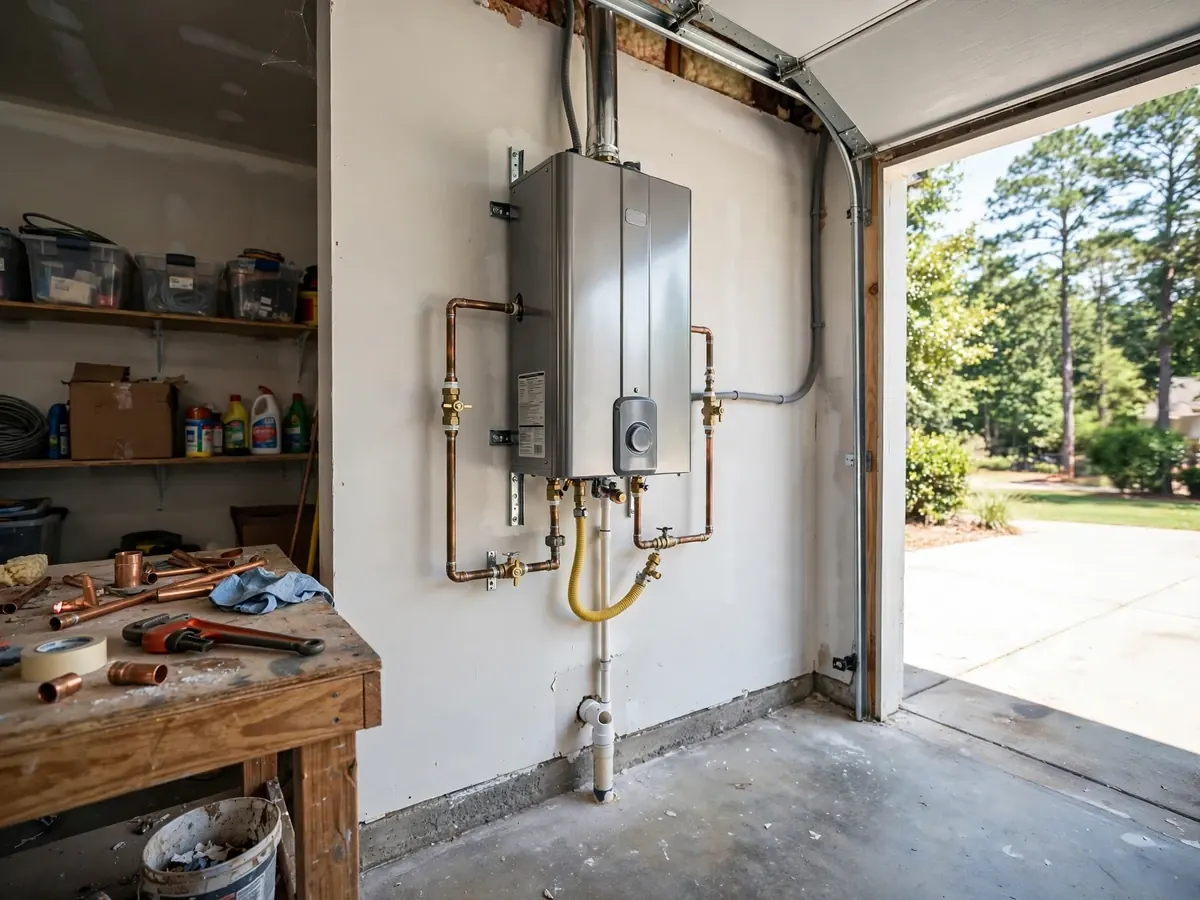
What a hybrid water heater actually is
A hybrid, or heat pump, water heater is an electric tank with a heat pump on top. Instead of heating water only with resistance elements, it moves heat from the surrounding air into the tank, much as a refrigerator moves heat out. Most models also keep conventional elements for backup, which is why they are called hybrids.
Two things follow from that design. The unit cools and dehumidifies the room it sits in, and it needs enough surrounding air to do its work. Both facts feed straight into the installation bill.
The factors that set the installation price
These are the items a plumber looks at, roughly in order of how much they swing the total:
Many electric utilities and state programs offer rebates or incentives for heat pump water heaters, and the details change. Ask your electric utility before buying, because some programs require the paperwork to be done before installation.
Want a real number for your basement? Call (508) 389-4045 and tell dispatch what you have now and where it sits.
Where the unit sits changes the work
The same heater costs very different amounts to install in different rooms. This table shows why.
| Location | What it means for the install | Watch for |
|---|---|---|
| Large open basement | Plenty of air, often a floor drain nearby | A cooler, drier basement, which some people welcome and others do not |
| Finished basement closet | Air supply is limited | May need louvered doors or ducting |
| Garage | Air is available but temperature swings | Cold winter air lowers efficiency, so the unit may run on backup elements |
| Laundry or utility room | Often close to a drain and the panel | Noise from the fan, which is about like a dehumidifier |
| Replacing a gas unit | Needs new electrical work and a different venting plan | Gas piping must be capped by a licensed plumber or gas fitter |
Questions to settle before you request a quote
A few answers up front make a quote faster and more accurate.
Gather these before you call:
- The make, size and age of the tank you have now.
- Whether it runs on gas, oil or electric power.
- Where it sits, and the size of the room around it.
- How many people live in the house and how many showers run in the morning.
- Whether a floor drain is nearby for the condensate.
- The open slots, if any, in your electrical panel.
- Any rebate paperwork your utility requires before installation.
Hybrid, standard electric or gas: what you pay for
A hybrid costs more at the start and often less to run, because the heat pump uses less electricity than resistance heating to make the same hot water. Whether the savings repay the extra installation cost depends on your electric rate, your hot water use and whether you can claim a rebate.
A standard electric tank is cheapest to buy and easiest to put in. A gas tank is a different install again, with venting and a gas line. Weigh the full job, not the unit tag alone, and compare it with a straight swap under water heater replacement before you decide.
Recovery is a real trade-off. In heat pump mode, a hybrid heats water slowly, so a big household may rely on the backup elements during busy mornings, which cuts the savings.
Milford, MA: water supply, permits and what to ask
Water hardness decides how fast scale builds on a tank's heating surfaces, and it affects how long any water heater lasts. We cannot give you a hardness figure for your street. Milford Water Company publishes a yearly report, and a simple test kit on your own tap gives a direct reading. Use the result when you pick a unit and decide whether a water treatment makes sense.
A water heater swap reconnects supply piping, so it sits outside the state's minor-repair exemption. Only a licensed plumber can pull the permit, and an inspection follows. Questions about your own job can go to the plumbing inspector through Town Hall.
If you live outside Milford, the same framework applies. Residents of Bellingham and Holliston have different municipal water systems, so ask your own water department what is in your supply.
When a hybrid is not the right pick
A hybrid is a poor fit for a tiny closet with no ventilation, a very cold unheated space, or a household that needs fast recovery and has no room for backup capacity. In those cases a conventional tank or tankless unit may serve better.
Our plumbers will tell you plainly if the room cannot support a heat pump unit. Oil burner work and electrical panel upgrades are outside plumbing, and an oil technician or electrician handles those parts.
Hybrid water heater cost questions from Milford homeowners
The unit itself costs more, and the room needs more: clear air space, a condensate drain and often a new circuit. The extra labor and parts are what raise the installation bill.
Most basements work, but a small closed room may need ducting or louvered doors. Manufacturers list a minimum room volume, and the installer should check yours against it.
Yes, it removes heat and moisture from the air around it. In summer that can help a damp basement. In winter, it adds a small heating load, so factor that in.
The state's minor-repair exemption does not cover new supply connections. A licensed plumber pulls the permit and the work is inspected. For your own job, Town Hall can direct you to the plumbing inspector.
The utility publishes a yearly water quality report, but hardness at your own tap is what counts. A test kit gives a direct reading, and scale on the heating surfaces shortens equipment life.
That depends on your timeline and any rebate. A hybrid pays back through lower running costs, so the shorter your stay, the less of that payback you collect.
Ready to price a hybrid for your basement? Call (508) 389-4045 with the size of your family and the room the tank sits in, and we will walk through the factors.