
Questions to settle before the install date
A good installation starts with a few facts about your house, not a product catalog. The plumber needs to know what the current heater runs on, where it sits, and how the household uses hot water at the busiest hour of the day.
Have these answers ready when you call:
- Fuel now: natural gas, electric, propane or oil.
- Where the unit sits: basement, closet, garage, attic or utility room.
- Number of people and bathrooms, and whether showers and laundry overlap.
- Age and size on the current tank's data plate, if you can read it.
- Whether the tank has ever leaked, rumbled or run out too soon.
Fuel types side by side
The best fuel is usually the one already piped to the house, unless there is a clear reason to change. Switching costs extra for a gas line or a new circuit.
| Fuel | Strengths | Watch for |
|---|---|---|
| Natural gas | Fast recovery, lower running cost where gas is piped in | Needs a flue or vent, a gas shutoff and a combustion air supply |
| Electric | No flue, simple placement, easy to install | Slower recovery and a dedicated circuit sized to the unit |
| Propane | Works where there is no gas main | Needs a tank or cylinder supply and a vented unit |
| Heat pump (electric) | Very low electricity use per gallon | Needs room, air flow and a condensate drain. Cools the space around it |
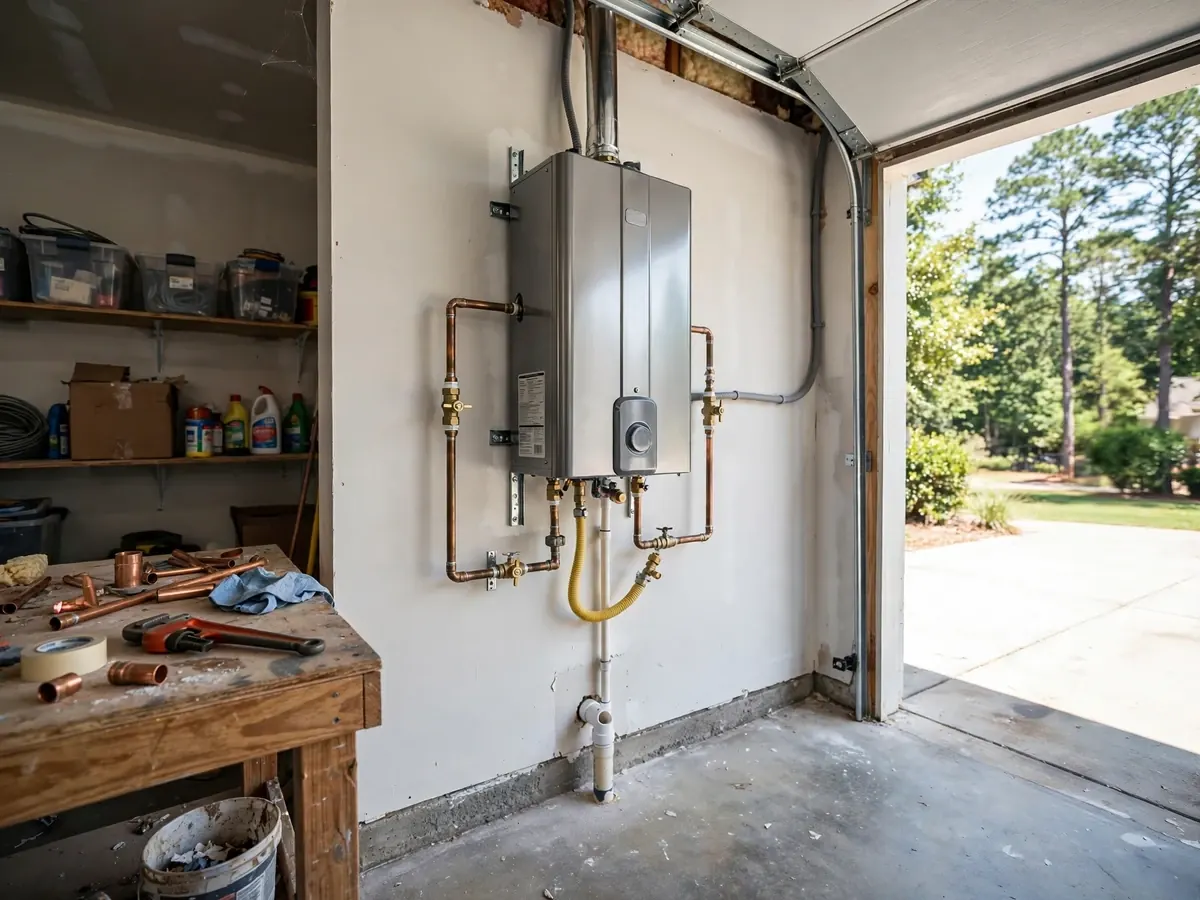
| Tankless | Endless hot water, small footprint | Higher upfront cost and different venting or power. See tankless water heater service |
Getting the size right
Pick the size by peak demand, not by habit. A household of two usually does fine with 40 gallons. Three to four people tend to need 50. Large families or soaking tubs call for 75 gallons or a high-recovery unit.
Look at the first-hour rating on the label, which is the hot water delivered in one busy hour. It matters more than the nameplate gallons. The plumber also measures the space, because a bigger tank needs height, width and clearance from the walls.
Venting, combustion air and clearances
A gas or oil heater has to send exhaust outdoors. An atmospheric unit rises through a flue into a chimney or vent pipe. A power-vent or direct-vent unit pushes exhaust out with a fan and can run through a side wall in plastic pipe.
Switching types changes the plan. An older chimney may be too large, too cold or poorly sloped for a modern unit, and the plumber will say so before ordering anything. Any heater also needs air to burn gas, so a tightly closed closet can need a vent opening.
Expansion tank, relief valve and drain pan
Heating water makes it expand. In a system with a backflow device or pressure-reducing valve, that extra volume has nowhere to go, so pressure spikes each time the heater fires. A small expansion tank on the cold line absorbs it.
Two other items belong on a proper install. The temperature and pressure relief valve needs a discharge pipe run to a safe point, never capped. A drain pan with a line to a floor drain or outdoors protects the floor if the tank leaks years from now.
Call and describe the room, the fuel and the household. We can book a visit to measure and price the job.
What an installation day looks like
Most standard swaps finish in a day. Fuel changes and new venting take longer.
- Arrival and walkthrough. The plumber confirms the plan with you, protects the floor and shuts off water, gas or power to the old unit.
- Drain and remove. The old tank is drained and disconnected. Its gas, vent, water and electric connections are checked for wear.
- Set the new unit. It goes on a level pan or base, with new flexible connectors, shutoff valves and the relief valve piped to a safe point.
- Vent, gas or wire. Venting is assembled and sealed. Gas lines are leak-tested. Electric units are wired and checked against the label.
- Fill and test. The tank is filled, air is purged, and the plumber lights or energizes it, then checks temperature and every joint.
- Handover. You get the temperature setting, the shutoff locations and the paperwork. The permit goes through the licensed plumber.
Permit and inspection in Massachusetts
State rules treat a new or replacement water heater as plumbing work, so the local plumbing inspector issues a permit before the job and inspects it after. Permits go only to licensed plumbers. A licensed master or journeyman plumber may also do the gas fitting side, which a gas fitter alone cannot do on plumbing.
Ask to see the permit, ask for written scope and price, and confirm the plumber carries liability insurance. You can check any plumber's licence with the Board of State Examiners of Plumbers and Gas Fitters.
Milford, MA: permits go through Town Hall
Milford handles building permits through an online portal linked from the town website, and the plumbing inspector works through Town Hall. For questions on your address, ask there before the install date so the inspection is booked early.
The town has also posted a scam alert about fraudulent permit-fee emails and texts. A real permit fee goes through the town's own portal, not a link in an unexpected message. Check the source before paying anything.
What shapes the cost of an installation
You get a clear price before work starts. These items move the number:
A planned upgrade is your own expense, not an insured loss. Some utilities and state programs offer rebates on efficient units, so ask your utility before you buy.
Call (508) 389-4045 and we will talk through your setup and give you a real figure.
Water heater installation questions
A like-for-like tank swap is commonly a half day to a full day. Switching fuel, adding a vent or upgrading the electrical circuit extends that, and the plumber gives the timeline when you agree the plan.
Tankless gives endless hot water in a smaller footprint, but the unit costs more and may need a bigger gas line or vent. Read the tankless page and let the plumber check your gas supply first.
Yes. The local plumbing inspector issues the permit before the work and inspects it afterward. Only licensed plumbers can pull the permit. Town Hall can connect you with the Milford plumbing inspector.
Often, yes, but moving it means new water lines, a new vent or gas run and an updated permit. The plumber prices it as a project, not a swap.
Milford Water Company draws from the Charles River, Echo Lake and several wellfields and treats the water before delivery. Hardness differs from tap to tap, so test yours and read the yearly water report before deciding on extras.
Ready to compare options for your house? Call (508) 389-4045 and say what the tank is, where it sits and what the household needs.
Related projects
If the tank is already failing, the water heater repair page helps decide whether a fix is worth it. New pipework around the heater falls under plumbing installation, and homes in Holliston can book the same planning visit.