
What a single-sink install actually involves
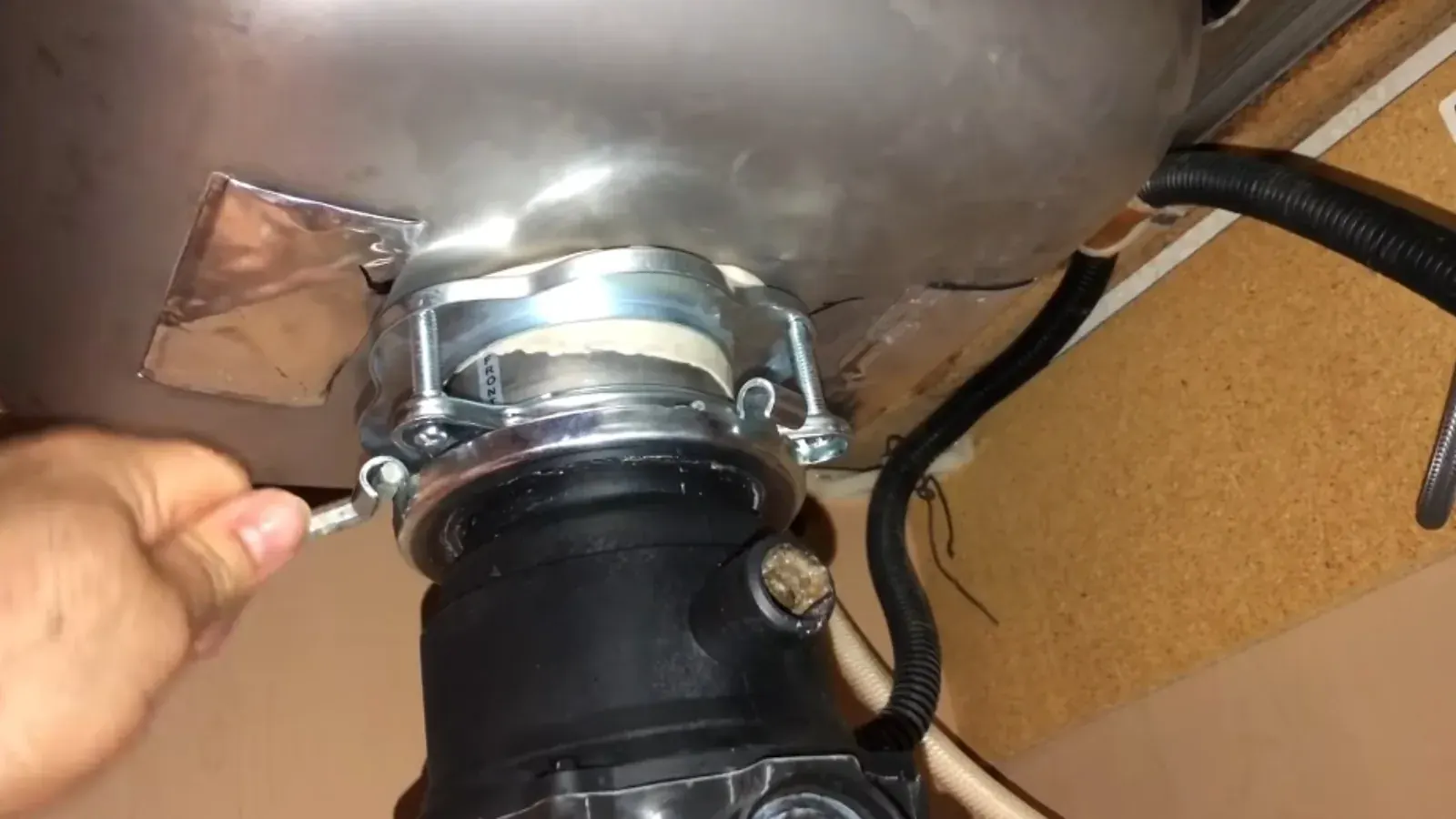
A double sink has two drains joined by a tailpiece and a waste arm. A single sink skips that. The strainer in the bowl is replaced by the disposal's sink flange, and the disposal hangs from it on a three-bolt mounting assembly.
From the disposal, a short discharge pipe runs to the trap arm. If you have a dishwasher, its drain hose also connects to a small inlet on the side of the disposal. That inlet is sealed with a plastic plug from the factory, and the plug must be knocked out before the hose goes on.
Single-sink cabinets are tight. Measure the space before you buy, because a half horsepower unit is noticeably shorter than a one horsepower model.
Picking the right size for one bowl
Motor size and feed type decide how the disposal behaves day to day. This table compares the common choices for a household sink.
| Choice | Suits | Trade-off |
|---|---|---|
| Half horsepower, continuous feed | One or two people, light cooking, tight cabinet | Slower on fibrous scraps, can jam more often |
| Three-quarter horsepower, continuous feed | A typical family kitchen | Takes a little more cabinet depth |
| Batch feed (stopper starts it) | Homes with young children | Slower to use, and the stopper must seat correctly |
Tools and parts to lay out first
Gather everything before you shut the water off. A half-finished sink is a long night without a kitchen.
Have these on the counter:
- The disposal, with its mounting kit and sink flange gasket.
- Plumber's putty, or the gasket supplied for the flange.
- A new trap, trap arm and discharge pipe if the old ones are corroded.
- A power cord kit if the unit does not come with a cord.
- A bucket, towels, slip-joint pliers, a screwdriver, and a hammer and dowel for the dishwasher plug.
Step by step: from old strainer to running disposal
Follow this order. Skipping ahead is how leaks and stripped bolts happen.
- Cut the power. Turn off the kitchen breaker and confirm the outlet is dead with a tester. Empty the cabinet.
- Remove the old strainer or disposal. Set a bucket under the trap, loosen the slip nuts, then unscrew the old flange and scrape off the putty.
- Seat the new sink flange. Press a rope of putty under the flange rim, or use the supplied gasket, and drop the flange into the opening.
- Build the mounting assembly. Slide on the gasket, backup ring and mounting ring, snap the retaining ring in, and tighten the three screws evenly.
- Prepare the dishwasher inlet. If a dishwasher will connect, tap out the plug in the disposal's side inlet with a hammer and dowel. Then fish the plug out of the chamber, or it will block the drain.
- Hang the disposal. Lift the unit onto the ring and twist until the tabs lock, with the outlet facing the trap arm.
- Reconnect the drain and the dishwasher hose. Refit the trap, tighten slip nuts by hand plus a quarter turn, and clamp the dishwasher hose to the inlet.
- Wire or plug in, then test. Plug in, restore power, run cold water and switch the unit on. Wipe every joint with a dry paper towel to catch drips.
Power: the part that decides DIY or call
A disposal needs a dedicated switch and a place to plug in, or a direct wire connection through a junction box on the unit. Many kitchens already have a switched outlet under the sink, installed years ago for a previous disposal. If yours does, plugging a cord-equipped unit into it is a simple task.
If there is no outlet, someone has to add one. Running a new circuit or wiring a switch is electrical work, and it is a separate trade. Do not improvise it. A stripped wire in a damp cabinet is a shock risk.
Milford, MA: what the water and the permit rules mean for this job
Milford Water Company treats its supply with zinc orthophosphate and potassium hydroxide to protect pipes from corrosion. Whatever your water, run cold water while grinding so scraps travel down the line instead of settling in the trap.
On permits, the state's consumer guidance says a plumbing permit is needed when plumbing is installed, altered, replaced or repaired, and that only licensed plumbers can pull one. Minor repairs on a fixture's working parts are exempt, but replacing a fixture or touching drain piping is not minor. If you are unsure which category your disposal swap falls into, ask the Milford plumbing inspector through Town Hall before you start.
What affects the price of a disposal install
A plumber gives you a clear price before work starts. These are the factors that move the number.
A disposal installed as an upgrade is a home improvement, not an insured loss. If an old disposal leaked and damaged the cabinet floor, ask your insurer about the water damage separately.
Want a real number for your kitchen? Call (508) 389-4045 and tell dispatch the sink type and whether there is power under it.
When to hand it to a licensed plumber
Install it yourself if the old disposal comes out cleanly, power already exists under the sink and the trap is in good shape. Call a plumber if the drain piping is corroded, the drain arm is mis-sloped, the sink is a stone or composite model you do not want to risk, or there is no power at the cabinet.
A first-time conversion from a plain strainer is also worth a visit, since the cabinet layout may need rework. That is general plumbing installation with a clear price up front. A unit that hums, will not turn or leaks from its body belongs on the garbage disposal repair list instead.
Neighbors in Hopedale and Bellingham call the same line for the same work.
Questions Milford homeowners ask about disposal installs
Most stainless steel and cast iron sinks with a standard three-and-a-half or four-inch drain opening accept a disposal. Some sinks, including certain composite and fireclay models, need a specific flange. Check the sink maker's notes first.
A first-timer should plan on two to four hours. A plumber swapping a unit with power already in place is usually much quicker.
The state's consumer guidance requires a permit when plumbing is installed, altered, replaced or repaired, and exempts only minor repairs to a fixture's working parts. Because a swap can touch drain piping, ask the Milford plumbing inspector through Town Hall.
No. If you have a dishwasher, its drain hose can run to the disposal inlet or to an air gap and a separate tailpiece. Many homes use the disposal inlet. If you do, knock out the plug first and keep a high loop in the hose.
Grease, coffee grounds in bulk, bones, fibrous vegetable peels and starchy scraps like rice and pasta. These clog the trap or coat the pipe wall. Run cold water for several seconds after grinding.
Milford Water Company treats its supply for corrosion control and removes iron and manganese, so the usual advice applies: cold water while grinding and routine cleaning of the grinding chamber. Ask the company for its Consumer Confidence Report for water quality detail.
Not sure the cabinet, drain or power will work for a new disposal? Call (508) 389-4045 and describe your sink. Dispatch can tell you whether it is a DIY job or a quick plumber visit.