
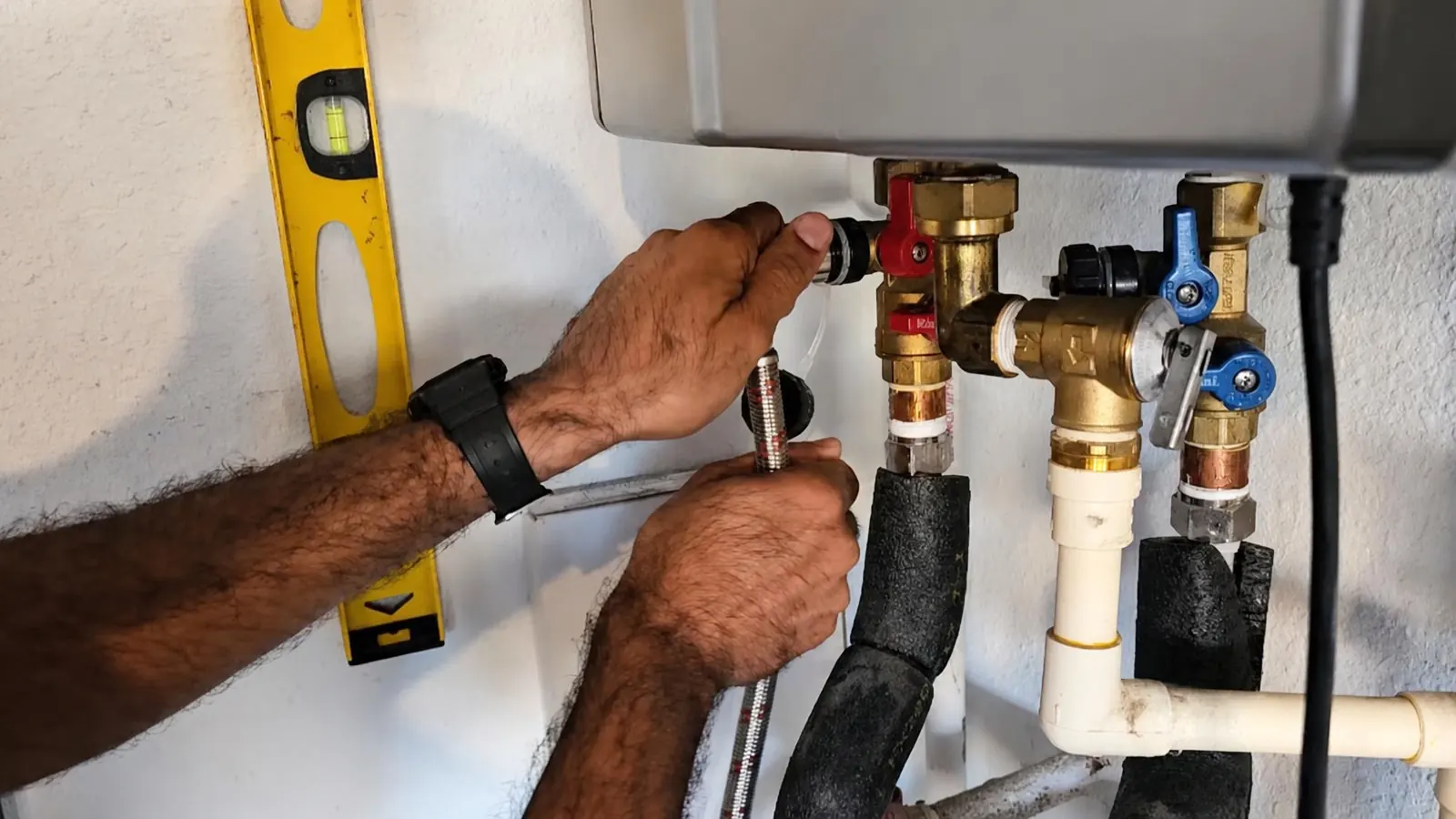
How a tankless heater works
When you open a hot tap, flow sensors start a burner or heating element. Cold water passes through a heat exchanger and leaves hot. When you close the tap, the unit shuts off.
That is why the water never runs out. The unit makes hot water as you use it. What limits it is flow rate, the number of gallons per minute it can heat by a set temperature rise. Run a shower, a dishwasher and a washing machine together and a small unit can fall behind.
Honest checklist: signs tankless suits your house
Mark each statement that is true for your home. The more you tick, the better the fit.
Tankless is a good match if:
- You often run out of hot water from a tank because the household is large or visits are frequent.
- The basement or closet space for a tank is tight or could be used better.
- Your gas line can supply the heater's higher burner rating or you are ready to upgrade it.
- There is a practical way to vent the unit through a wall or roof.
- You plan to stay in the house long enough to see the savings.
- You will descale the unit on the schedule the maker sets.
Tankless versus a tank heater
Neither type wins everywhere. This table compares the points that matter most.
| Point | Tankless | Storage tank |
|---|---|---|
| Hot water supply | Continuous, limited by flow rate | Limited by tank size, then recovery time |
| Space | Compact wall-mounted unit | Needs floor space for the tank |
| Upfront cost | Higher, with gas, venting or electrical upgrades possible | Lower in most homes |
| Upkeep | Periodic descaling and filter cleaning | Periodic flushing and anode check |
| If it fails | Often repairable by part, but the part and the service call vary | A leaking tank usually means replacement. See water heater installation |
| Lifespan | Generally longer than a tank when maintained | Shorter, and shortened by sediment |
What a tankless install may require
The surprise on many tankless projects is not the heater. It is what sits around it. A gas unit pulls far more gas per hour than a tank burner, so an older half-inch gas line may need to be replaced with larger pipe. Venting is different too, usually with sealed plastic or stainless pipe through a side wall.
Electric tankless units draw a lot of current, and some homes need a service upgrade. A licensed plumber can walk the house, check the gas line, the vent route and the electrical panel, and tell you what is needed before you commit. Our tankless water heater service covers sizing, installation and servicing of these units.
Call and tell dispatch your fixtures, the fuel and the space. The plumber will explain what each option needs in your house.
Where the savings come from, and where they do not
A tank heater loses some heat through its walls all day, even when nobody is home. A tankless unit avoids that standby loss, which is where most of the saving comes from. Households that use little hot water see a smaller benefit than households that use a lot.
Savings can be eaten by scale. Mineral deposits in the heat exchanger make the unit work harder and trip its error codes. Skipping maintenance is the most common way a tankless heater ends up costing more than expected.
Milford, MA: water quality, gas and wells
Milford Water Company removes iron and manganese and adjusts pH for corrosion control, but hardness varies from tap to tap, so a test kit tells you more than a town average would. Mineral scale is what hurts a tankless heat exchanger, so the practical step is to read the utility's yearly water quality report and test your own tap before you buy.
Gas service comes from your gas utility, which also sets the rules for the meter and the line to the house. Ask it whether the existing service can feed a tankless burner before the plumber orders equipment.
Neighbors in towns like Mendon rely mostly on private wells, since public water reaches only parts of that town. Well water can carry minerals or sediment, which makes a water test and a filter or softener a more important part of the plan for a tankless unit there.
According to the Massachusetts plumbing code (248 CMR), installing a water heater is permitted work, and manufacturer installation guidelines set the venting and gas sizing.
What affects the price of going tankless
The heater itself is only part of the bill. These factors set the total:
A water heater replacement is normally a maintenance expense. Insurance may cover sudden water damage from a failed tank, but not the cost of upgrading to a different type of heater.
To price your own house, call (508) 389-4045 and tell dispatch the fuel and fixtures.
The verdict, and who should skip it
Go tankless when the family is large, space is tight and the gas, venting and water side are ready. Stay with a tank when the budget is the first concern, the gas line is small and hard to change, or hard water is untreated. A well-installed tank heater is still a sound choice.
If the existing tank is leaking or past its useful life, the decision becomes concrete, and the water heater installation page lays out the process for either type. Homeowners in Hopedale ask the same question, and the answer depends on the house, not on the town.
Tankless water heater questions from Milford homeowners
Generally yes, when maintained. They avoid the sediment buildup that corrodes tank bottoms, but they need descaling on the maker's schedule. Skip it and the heat exchanger suffers.
It depends on the unit's flow rate and the temperature rise it must supply. A properly sized unit can serve two showers. An undersized one will fall short, which is why sizing comes first.
Often. A tankless burner draws more gas than a tank burner. Ask your gas utility whether the service and meter can supply it, and have a licensed plumber check the pipe inside the house.
Mineral scale can build up in the heat exchanger. Hardness differs from home to home, so test your own tap. Check the utility's water quality report and test your tap.
It can, but private wells vary a lot in minerals and sediment. Test the water first and plan for a filter or softener. This matters for homes in Mendon, where many rely on private wells.
Gas piping, venting and plumbing work call for a licensed plumber with a permit. Massachusetts does not list water heater replacement as a minor repair, and a permit means the work gets inspected.
Still deciding? Call (508) 389-4045 and describe your hot water use. Dispatch can explain what a site visit would look at.