
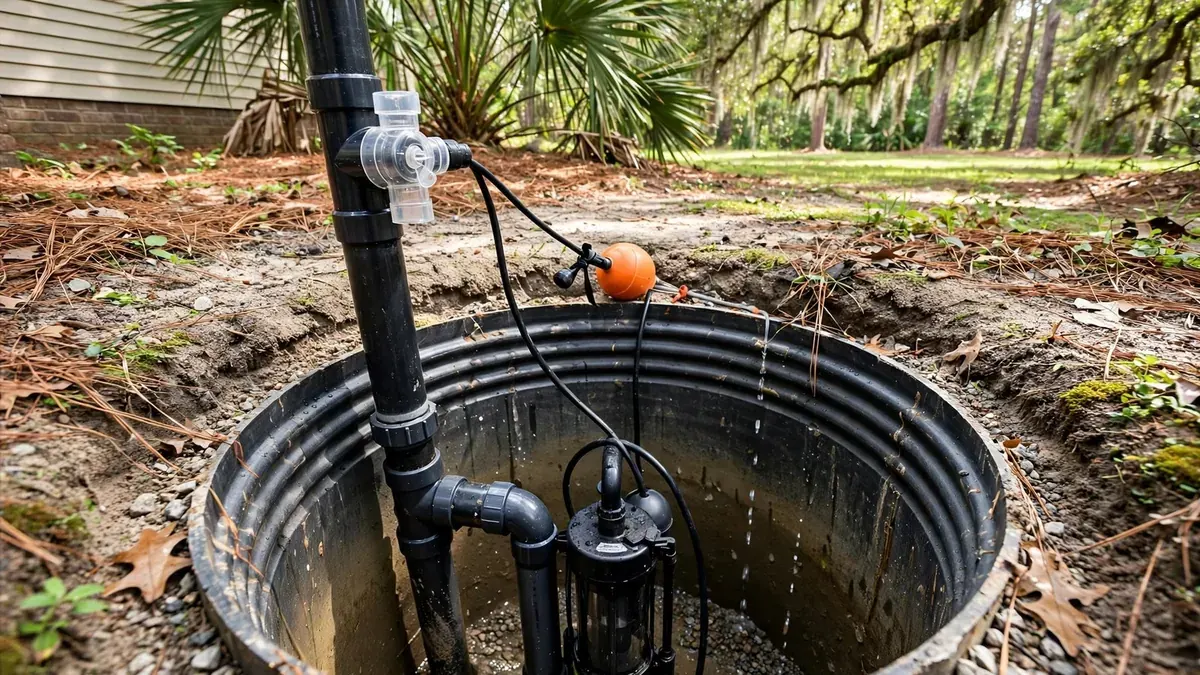
How a sump pump system is installed
The order below is typical. A basement with an existing pit skips the first two steps.
- Choose the low point. Water collects where the slab is lowest or where it enters. The pit goes there, so the pump sees water first.
- Cut the slab and dig the pit. The concrete is cut and broken out, and a hole roughly two feet deep is dug. A plastic or fiberglass basin with holes in its sides is set in gravel and the slab is patched around it.
- Set the pump. The pump sits on a flat base, not in loose dirt or gravel, so it does not pull in grit. The float switch needs room to rise and fall without touching the wall.
- Add the check valve and discharge pipe. Pipe runs from the pump up through the check valve and out of the house, with a small relief hole drilled in the pipe to prevent air lock.
- Run the discharge outside. The line ends well away from the foundation, over grade that falls away, with an outlet that cannot freeze shut.
- Power and test. The pump plugs into a dedicated grounded outlet with GFCI protection. The plumber fills the pit with water and watches a full cycle.
Submersible or pedestal: which pump fits
Both types work. The right one depends on the pit and how the basement is used.
| Type | How it works | Trade-offs |
|---|---|---|
| Submersible pump | Sits inside the pit under water | Quieter, better with a sealed lid, harder to reach for service |
| Pedestal pump | Motor sits above the pit on a stand | Easier to service, louder, takes more room, usually shorter life |
| Primary plus backup pump | Two pumps in one pit or two pits | Covers a failure but needs a larger pit |
| Battery backup | Runs on a deep-cycle battery | Works during a power outage, battery needs replacing |
| Water-powered backup | Uses the municipal supply pressure | No battery, but needs a suitable supply and uses water |
Where the water goes: the discharge rules that matter
Discharge placement is where many installations go wrong. Water pumped out and dropped beside the wall simply soaks back into the soil and returns to the pit, so the pump cycles all day. Run the pipe far enough that the water spreads away from the house and does not drain back toward the foundation.
Never connect a sump discharge to the sanitary sewer or a septic system. Clean groundwater can overload a sewer plant during storms and flood a septic field. If a neighbor's yard or a public street would receive the water, check the town's rules first.
Checks for the outdoor end of the discharge:
- The outlet sits well away from the foundation.
- The grade falls away from the house, not back toward it.
- The pipe pitches so it drains after each cycle and cannot hold ice.
- Winter freeze-up has a plan, such as a bubbler or a pop-up outlet.
- Call 811 before trenching, so buried lines are marked.
Milford, MA: the town sewer and the town's rivers
The town's wastewater plant already handles several million gallons a day and releases treated water to the Charles River. Every gallon of clean groundwater sent into the sewer by a sump pump adds to that load, especially in a storm. Call the Sewer Department at (508) 473-2054 about your street before you consider any connection, and keep the discharge on your own lot or the approved route.
The pit only helps if groundwater reaches it, and in a town with a river draining it and another running through it, plenty of lots sit close to the water table. Watch your basement after the first big storm of the season. A homeowner in Mendon has a septic system rather than a sewer, which makes a proper outdoor discharge even more important there.
Under Massachusetts rules, drainage connections need a permit that only a licensed plumber can pull. Questions about your own system go to the local plumbing inspector.
DIY or call a plumber
Some homeowners swap a failed pump on an existing pit. That can be a minor repair when it replaces a working part, though changing the discharge or check valve is piping work. Installing a new pit, new discharge piping or a connection to anything beyond the house is plumbing work and needs a permit, and only a licensed plumber can obtain it.
Electrical limits matter too. Run the pump from a grounded, GFCI-protected outlet, and have an electrician add a dedicated circuit if the existing one is shared with a freezer or washer. If you smell gas or see water near live equipment, stay out and call for help first.
What affects the price of a sump pump installation
You hear the price before any work begins. These factors push it up or down:
A standard homeowner policy often leaves out water that comes up through the floor, even when a pump failure causes it. Ask your agent about a water backup endorsement before the next storm.
Not sure whether you need a pit or just a new pump? Call (508) 389-4045 and describe what the basement does after heavy rain.
Testing and upkeep after installation
Pour a few gallons of water into the pit every few months and watch the float rise, the pump start and the pit empty. Listen for grinding or a motor that runs without moving water. Clear grit from the pit and check that the discharge outlet is not blocked.
A pump that has run for years can fail without warning, so plan for its replacement before it happens. When a pump stops or runs constantly, the sump pump repair page explains what to check, and the basement waterproofing page covers the drainage that feeds the pit. If you live in Bellingham, the same maintenance applies.
Sump pump installation questions from Milford homeowners
Pits are commonly around two feet deep, but the correct size depends on the pump, the water volume and the slab. Your plumber should size it so the pump does not short-cycle.
If the basement has flooded before, or if you lose power during storms, a backup is wise. The primary pump cannot run without electricity, and storms are when the pit fills fastest.
No. Clean groundwater should not be sent into the sanitary sewer or a septic system. If you are unsure what your street allows, call the town Sewer Department at (508) 473-2054.
Yes for a new system. New drainage piping falls outside the state's minor-repair list, so a licensed plumber pulls the permit before work starts.
Causes include a stuck float, a failed check valve letting water flow back, a discharge dumping near the wall or very high groundwater. A plumber can find which one it is.
Not always. Watch the basement through a few heavy storms, and call a plumber if water shows up at the floor joint or through the slab.
Want a sump system priced for your basement? Call (508) 389-4045 and tell dispatch where the water appears and how often. We will explain the options before any work starts.